


When we lived in Somerset, a few families would gather around a fire on Sundays for a simple practice of giving thanks.
We’d sit round the fire and go one at a time with each person saying something they were thankful for. Kids and adults alike. We’d finish with a shared meal which was the merry reward after a beautiful period of reverence. Everyone would bring a dish they’d lovingly prepared, kids all over the place, the serious and the funny all in one.
A few years ago my wife and I realized that we had no desire to go to church, and yet we desired a regular way of showing our kids that we cared about this world, that we cared about each other, and that we cared about the simple fact of being alive at all.
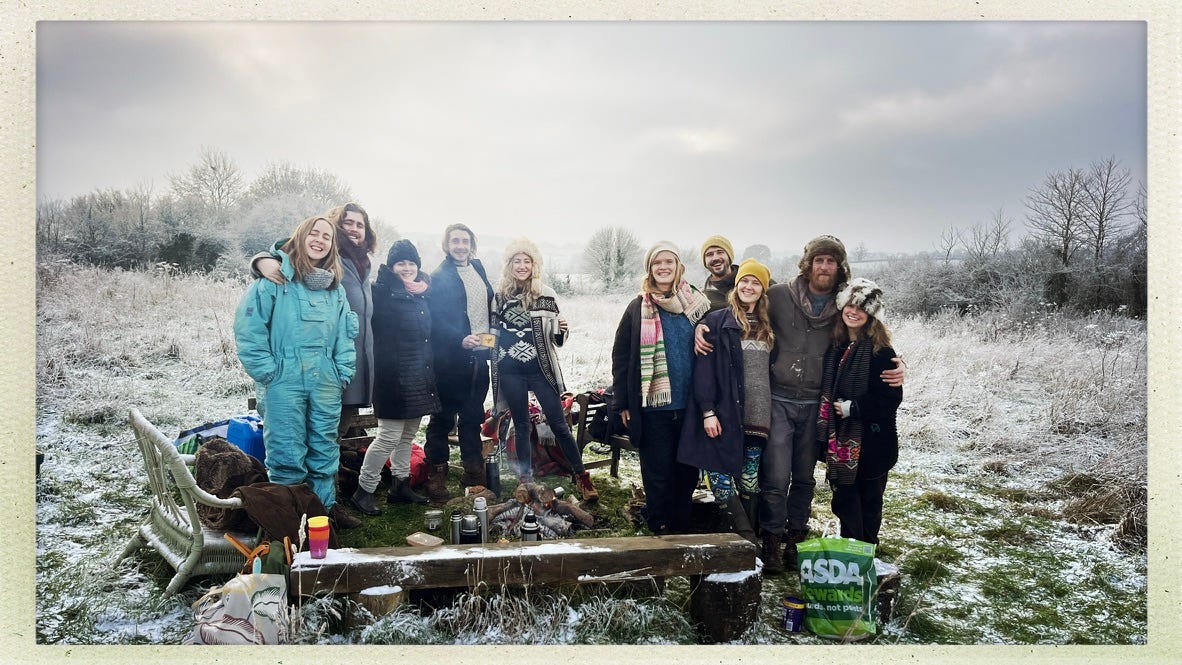
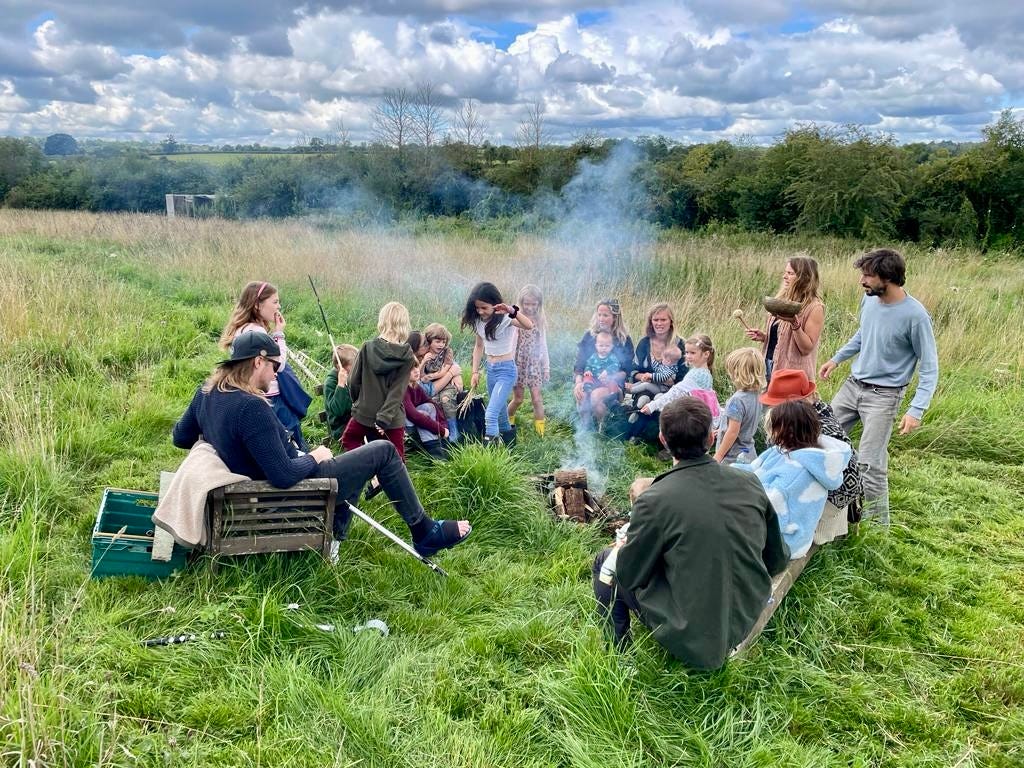
What I remember most about the gratitude circle we created in Somerset was seeing the children change. When we first started the gratitude circle the kids would all be right at the back, shy, hiding behind a parent, not engaging too much. Then over time, month on month, something would happen. They’d start to put their hands up, start to find their voice in front of a group and actually say what they were thankful for. It was absolutely beautiful to watch them come to appreciate the experience and grow that way over the years.
We’ve kept our own version at home ever since. Every Sunday we sit together as a fmaily for ten minutes. We start with a short meditation to settle and then each of us takes it in turn to hold a ‘talking item’ and says 1) one thing we’re grateful for, 2) one thing we’d like to change, and 3) what we love most about the person sitting to our left.
Some weeks if there’s a topic or issue that needs to be aired we’ll pick a theme and integrate that into our circle so everyone gets to have their say on the subject.
The kids have come to expect and enjoy the ritual and it’s often the moment of the week when the real stuff gets said. Just telling the person to your left out loud what you love about them has a wonderful effect on a family.
I’ve come to the conclusion that we’ve lost something as a culture and most of us feel it in some way or another even if we can’t put our finger on what it is.
We’ve got rid of the ritual in everyday life.
Apart from the weekly ritual of watching of football in a pub, how often do we actually gather, and how often do we gather in an awareness and appreciation of our lives?
The very few rituals we’ve retained have all been handed over to commerce. Christmas is the prime example. It started as one of our most significant ceremonies, a celebration of light in the middle of winter, and we’ve turned it into a shopping occasion. The meaning has been quietly sold off. And then we’re left wondering why we feel so hollow at the end of the day, as if we’ve just gone through the motions of something which used to mean a great deal.
My appreciation of ritual and ceremony emerged a few years ago while I was running a cutting edge tech company and at the same time training as a druid. That’s right, I know, that’s what you think when you hear the word “druid” (robes and all, Stonehenge at first light etc). The reality is that Druidry is simply a nature-based philosophy with a very old and beautiful way of looking at the world underneath the surface.
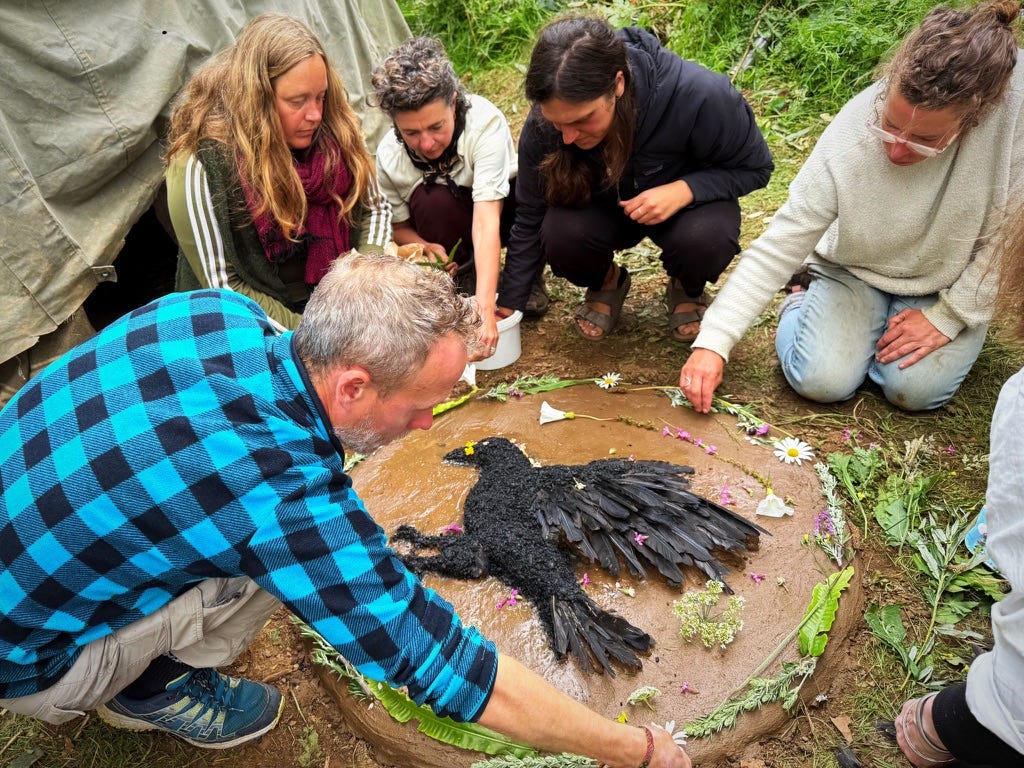
The druids saw the year as a wheel, a cycle of birth and growth and death and rebirth, turning over and over again. The land was alive to them, a single, interconnected, breathing organism and we were a part of nature rather than the owners of it.
What the druids, and most indigenous wisdom traditions, knew and what we’ve forgotten is that ritual is not decoration. It has a powerful effect on your wellbeing.
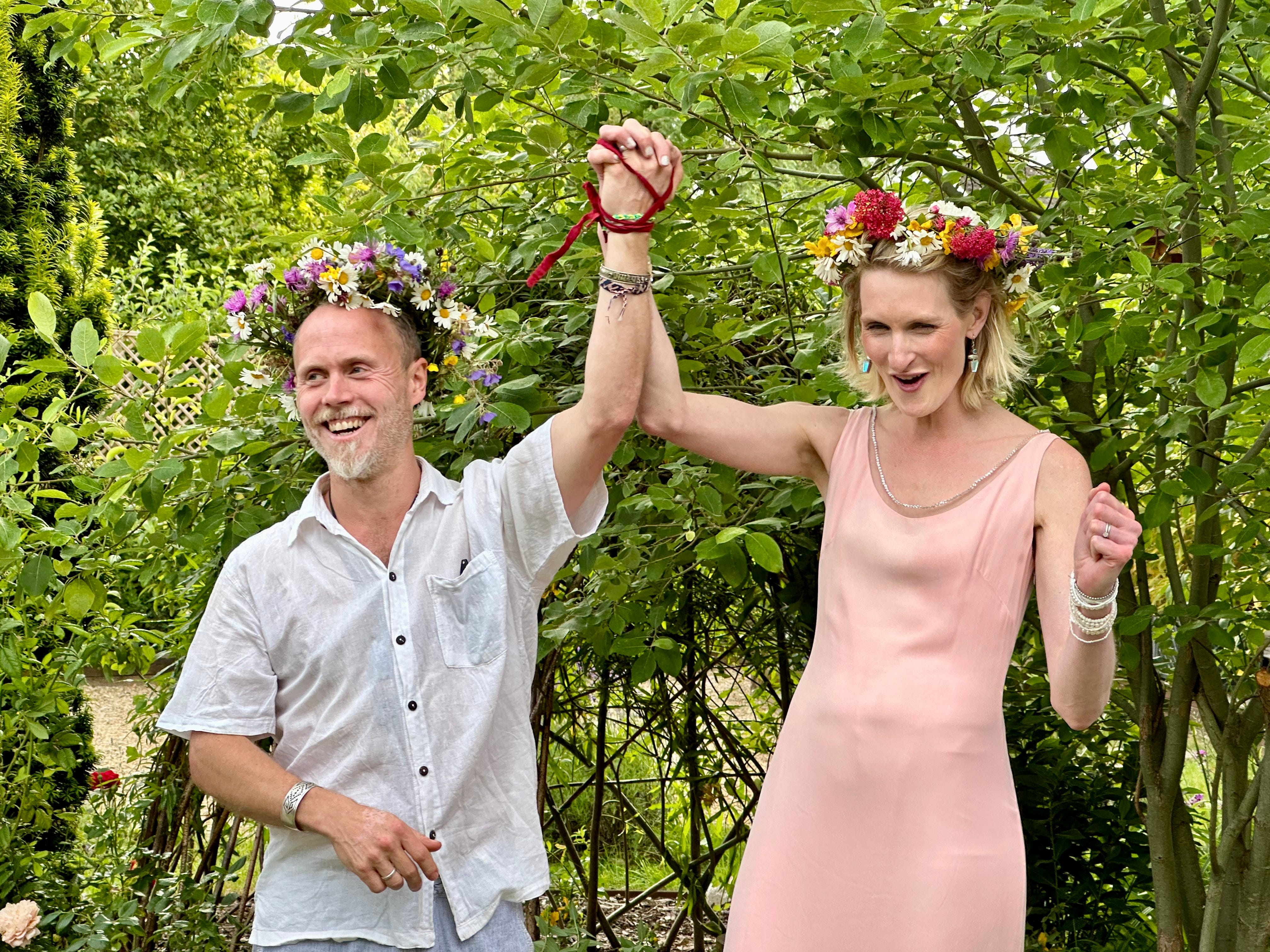
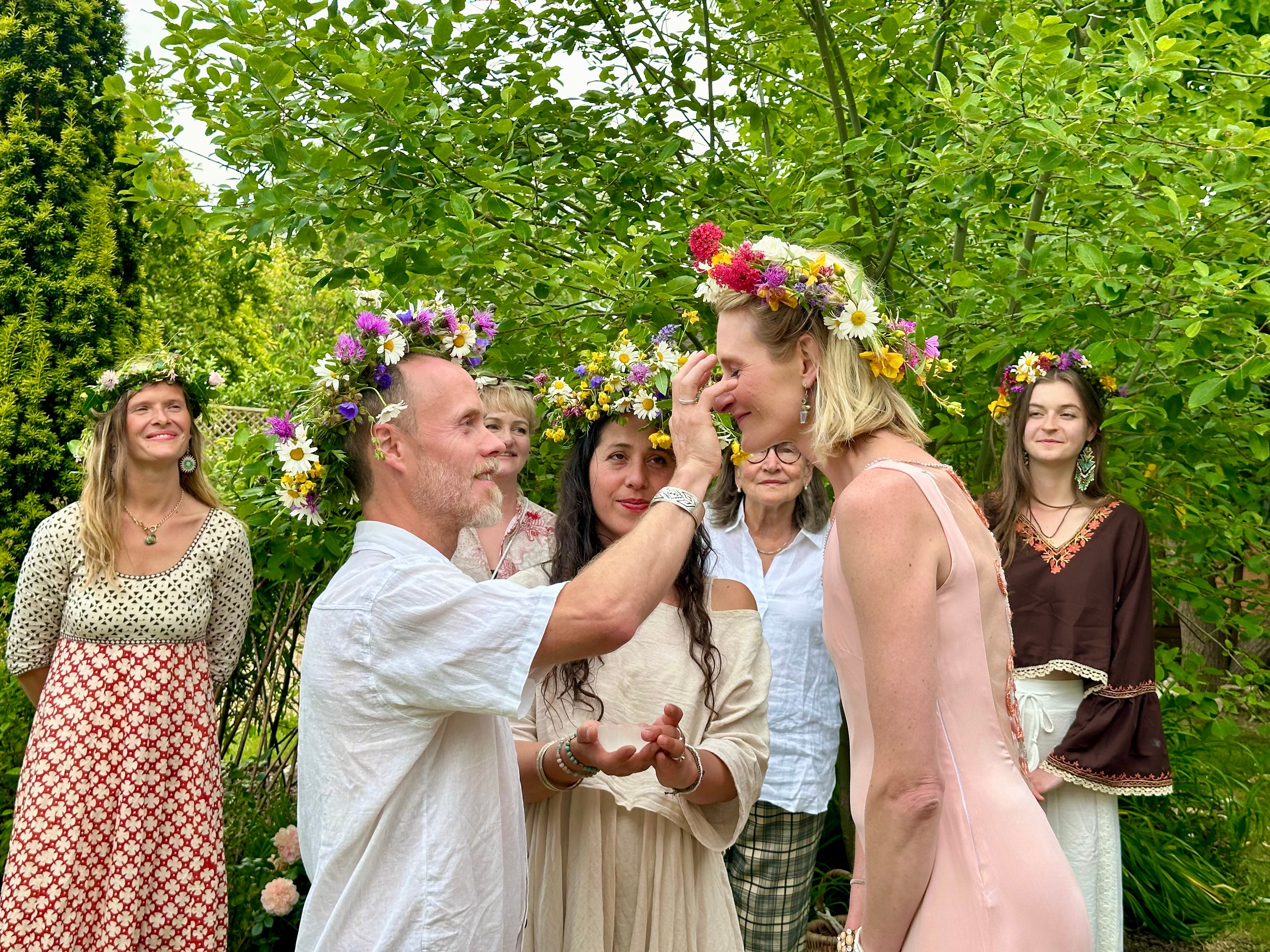
The sociologist Émile Durkheim coined the term over a hundred years ago: ‘collective effervescence’ which is the energy that runs through a group when they are together in ceremony, uniting them and making the mundane feel sacred.
Just recently, anthropologist Dimitris Xygalatas measured participants’ heart rates during ritual and found that they synchronize. It seems that we bond through ritual at a level below language.
There’s a huge and growing body of research showing that regular family rituals are associated with stronger bonds and greater well-being. Particularly in the case of children.
The science is now beginning to prove what every traditional culture has known for centuries…

Next week we’re lighting that same fire here in the community we have joined in Costa Rica. Our new home.
A few families in this community have agreed to try the weekly circle. We’ll gather by the Sunday farmer’s market, so people can wander over and join in while they shop. 15, 20 minutes, nothing complicated. Just a group of us deciding that giving thanks for being alive this way is worth doing together.
But a ritual doesn’t always have to be a fire or a circle. For years a group of my friends would meet up at the same Indian restaurant every three months just to keep in touch with each other. That was a much-loved ritual.
A long 2 day walk with old friends once a year is a ritual. They’re the moments where you’re actually properly present with each other and that’s what people value. I believe that’s what a ritual is really all about. Deep down, it’s a sacred moment you protect, and you come back to on purpose.
You don’t need the robes, you don’t need the tradition. You can make your own. A simple thank you said out loud before a meal, in front of your children, is a ritual. This is what we say each time we sit as a family:
We are grateful.
We are grateful for being.
We are grateful for being together.
These rituals cost us nothing more than a few moments. They bind us together. They bring a bit of the sacred back. They make us genuinely grateful that we’re here at all. All our convenience and our obsession with optimisation cannot do that.
In a world that’s accelerating with AI, a world full of screens and everything smoothed over and sold back to us, bringing a little bit of ceremony into the everyday might be one of the most human things we can do.
This lives in the heart of Aliveness. It’s small, repeated acts that keep you alert to the preciousness and brevity of it all.
Go deeper with Aliveness
Paid subscribers get everything you need to turn these ideas into a daily practice:
A 1:1 Aliveness call with me — part coaching, part honest conversation, focused on the one thing your life is asking of you.
The Aliveness Practice eBook — the whole practice in one place, to come back to on the days you feel yourself drifting.
Aliveness workshop recordings — listen and practise in your own time.
The Ultimate Meditation audio — 18 minutes to look back from the end of your life and feel what truly matters now.
All of it for $10 / £8 a month (less than a single coaching session, for a whole year of practice and support). Cancel anytime.
This week’s question.
What’s one little ritual you could bring into your week that would just stop you, make you notice and be genuinely grateful that you’re there? Please reply below and let us know what comes to mind - your ideas might inspire others.
Feel the preciousness of life. Make the most of the time you’ve got.
Live happy,
Hoppy

Tools / Essays / Events / Instagram / Manifesto / About
If this article has landed with you, please do pass it on to one person who needs to see it.
I’m a former CEO and filmmaker as well as a trained Soul Midwife and Druidic Bard. Aliveness was born at the edge of life: in my own near-death experiences, at the bedsides of the dying, and in what ancient wisdom and modern psychology teach about feeling fully alive. My dream is that Aliveness becomes as impactful as Mindfulness - a daily practice that enables people to live more bravely and to create a more present and generous world.
Please support this vision by subscribing


A Christmas gift that could change someone’s year
If someone you love is just missing that spark of aliveness, is struggling with decision making, drifting quietly or is half way through thinking “I should be sorted by now” then a gift subscription might just be the most meaningful thing you can give this Christmas. It comes with the practice, the Aliveness eBook and a call with me.