


ALIVENESS
A philosophy and practice for living fully in the awareness that life is finite.
Free subscribers receive The Aliveness Practice, designed for a life of no regrets. Paid subs also get access to live meditations and AI guides.
Most of us spend our lives protecting what we have. Not because we are selfish, but because we are unknowingly acting from a place of fear. This newsletter explores Bob Marley's famous words on living for others, where that fear actually comes from, and the incredible changes that occur when we stop letting it run the show.
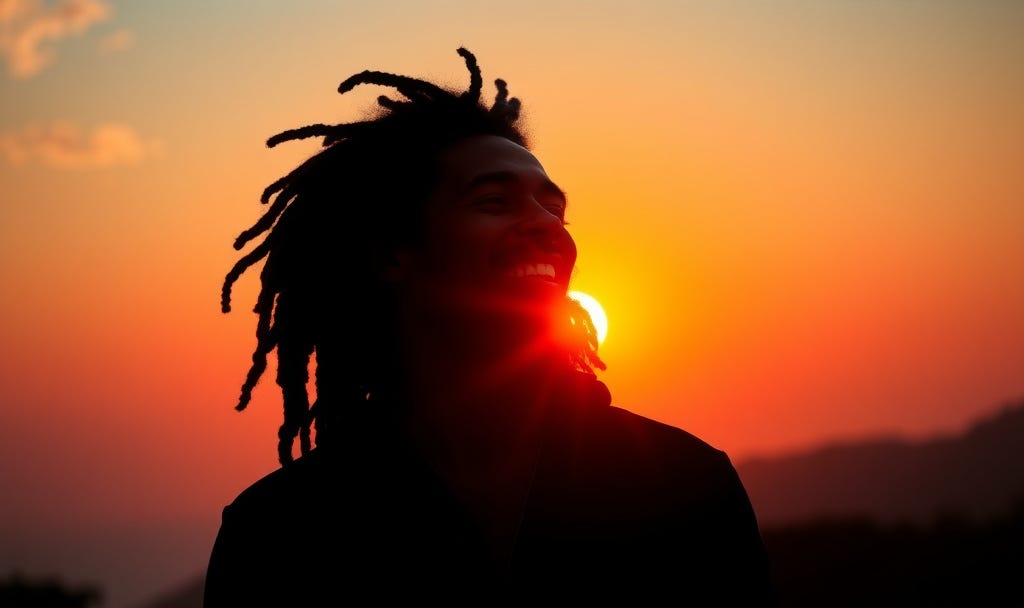
“Live for yourself and you will live in vain. Live for others, and you will live again.”
Bob Marley didn’t put these twelve powerful words on a poster. Like so much of his timeless wisdom, he wrote them it in the middle of a song called Pass It On, tucked between the other verses, not announced or explained.
Bob might just be my favourite musician of all time. As much as I love his melodies, I believe his music will endure for decades to come due the universal truth in his lyrics.
Bob Marley grew up with almost nothing in Trenchtown, Kingston. His Rastafarian faith was built around a specific idea: that Babylon, the system of accumulation and self-interest, was the root of human suffering, and that the only way out was through community, sharing, and living in service to something larger than yourself.
In 1978, Marley organised the One Love Peace Concert in Kingston to try to unite Jamaica's two warring political factions. Two days before a previous concert he had been shot for attempting exactly this. He performed anyway. On stage that night he brought the two political leaders together and joined their hands above his head. That is what service looks like when it costs you something.
Before we explore what Bob’s famous quote means, we need to understand why most people are inclined to protect our own interests first, before those of others.
The reason is fear.
At its deepest level, fear is not about the thing you think it is about. Not money running out. Not status disappearing. Not failure. These are the surface forms.
Research on Terror Management Theory, has demonstrated something uncomfortable: underneath our everyday anxieties, driving more of our behaviour than we realise, is the awareness that we will die. The unconscious mind responds by prioritising survival above almost everything else.
In a world that makes us feel threatened though relentless exposure to negative news, our attention narrows onto self-protection. Wealth, possessions and status become psychological buffers against the fear of ending.
The equation the unconscious runs is: more resources means greater safety. And so we accumulate, rather than share. We actually hoard not just money but time, energy, attention and love. We have become conditioned to hold things close in case we run out.
This pattern does not stop at individuals. The same fear that drives a person to accumulate beyond what they need also drives communities and nations to do the same thing.
Countries who prioritise their own self-interests, stockpile wealth and military power for the same unconscious reasons people fill their houses with things they never use. Even thought we live in a world of abundance, with easily enough resources to go around, the fear of future scarcity keeps attention fixed on getting rather than giving.
The result is a world where vast amounts of human energy go into protection and control rather than generosity and collective flourishing.
To put this into perspective, today there are roughly 3,400 billionaires on Earth, with a combined wealth of around $20 trillion. At the same time, between 640 million and 720 million people still experience hunger, and nearly 300 million people face acute food crises (Forbes).
I can trace this in my own life with uncomfortable clarity. For most of my adult life I had been building a career for myself.
As a film director I wanted to make great art, but I was also interested in status, accumulating wealth, ambition. There was a joyful frivolity to the films I made and I enjoyed success in what I did, but there wasn’t much deeper purpose at play. In fact, one of my best friends once said to me: “Why don’t you make something that actually means something?” That hit hard, and I am still grateful to this day for those words.
When I started my drone entertainment company Celestial in 2020, my spiritual horizons had shifted. I wanted this new, epic artistic medium in the sky to inspire people from within. I wanted the art to be in service to something larger. But I made a fatal compromise with my co-founder at the very beginning.
I agreed to prioritise commerciality over artistic integrity, rather than insisting on a balance between the two. It seemed very sensible at the time... get the business making money first, then make great art. But that compromise had a knock on effect that the company was, at its foundation, oriented around building value in the business rather than creating art that inspired.
That self-protective decision shaped a lot of serious issues that followed, both with the business and inside myself. On reflection, even though I though my desire to serve others had changed, I realise I had unconsciously remained in service to myself. Still acting from fear. Still protecting. This lead me to becoming physically and mentally sick over time, and ultimately onto the path I am on today.
Bob Marley’s sage line is not just philosophy. It is a description of something structural. The self-focused life is, in the end, less durable than it appears. And this is not just my experience talking. The science backs it up.
Elizabeth Dunn, Lara Aknin and Michael Norton published a study in Science in 2008 tracking people’s happiness in relation to how they spent their money. Across countries and income levels, they found that spending on others produced significantly more happiness than spending on oneself. The effect was consistent whether people were wealthy or not. This is not a spiritual claim. It is a measurable one.
When people begin to make peace with their own mortality, the grip of self-protection tends to fade. The urgency to accumulate loses some of its force. Attention shifts toward giving rather than getting, toward participating in life rather than managing it from behind glass.
Generosity becomes easier not because people become more virtuous, but because they are no longer quite so threatened by the fact that life is finite.
It is no coincidence that billionaires are often the same people most obsessed with living the longest. The very people who have hoarded the most resources are now spending fortunes funding longevity companies, trying to outrun the one thing their wealth cannot buy them out of.
At its heart, this is not about health. It is about the fear of ending. The same fear that drove the accumulation in the first place.
We have forgotten the simple truth that death is a perfectly natural part of life, and the ONLY thing in life that is guaranteed.
And this is where Bob Marley’s vision becomes something larger than personal transformation.
When this shift happens not just in individuals but in communities and nations, something changes at a different scale. The scarcity mentality that drives so much of what is wrong with the world has, at its root, the same fear that drives a person to hoard what they don't need or postpone a conversation they know they should have.
A world that has made genuine peace with their mortality would share more readily. Communities would become less territorial. The inequality we have built is, in no small part, the architecture of collective fear.
Aliveness is a practice that helps us remember our mortality, in a culture that prefers to forget death exists. This simple remembering allows us to live fully and flourish. Mortality awareness dissolves fear. Fear dissolution makes generosity easier. Generosity, at scale, makes a more equal world.
Which brings me to what Bob Marley actually understood about living again. When you begin to live for others, the experience of your own life changes in ways that are hard to describe without sounding like a greeting card.
When you are in service to others, you come back to life. I know this from my own experience, as someone who spent almost twenty years putting myself and my family first.
The work feels lighter as there is less of the grinding resistance that comes from doing something primarily for your own benefit. A certain emptiness inside disappears. The successes carry more meaning because they carry someone else’s weight alongside yours. The setbacks feel less personal because the thing you are building is no longer just about you.
There is an abundance that comes from this shift that surprises people. Not always more money, though often that too. More opportunity. More connection. More of what actually makes a life feel worthwhile.
Plus - living for others does not have to be grand. Most of the time it isn't.
It is making eye contact with the person serving your coffee and actually seeing them.
It is asking someone how they are and waiting for the real answer.
It’s volunteering in your local community.
It is giving your children your full attention rather than half of it while your phone glows in your hand.
It is remembering what a friend told you last week and following up without being asked.
It is putting someone else's need ahead of your own schedule for ten minutes, even when ten minutes feels like something you can't spare.
None of this costs a thing. All of it is felt.
“The best way to find yourself is to lose yourself in the service of others.” (Gandhi)
Most people who move from self-service into genuine service to others say some version of the same thing: there is no feeling quite like it. Not the feeling of having more. The feeling of having mattered.
Which is the whole point. Because your legacy is not your house, your wealth or your status. It is how you made others feel. The people who live longest in memory are never the ones who accumulated the most. They are the ones who gave something.
Thank you Bob, for having the strength to overcome your struggles, for seeing the love in humanity, and for everything you gave. It wasn’t easy.
Thank you for the lives you touched, and continue to touch today.
Your truth lives again each time I play your most excellent tunes.
This week’s question.
Where in your life are you still protecting something that could be given away instead?
Not money necessarily. Time. Honesty. Presence. The thing you have been holding back. What would open up if you let it go?
If this article landed with you, please share it with one person who needs it.
Thank you for being here. Make the most of the time you have.
Live happy,
Hoppy
Subscribe to receive the free Aliveness Practice
Tools / Essays / Instagram / Manifesto / About
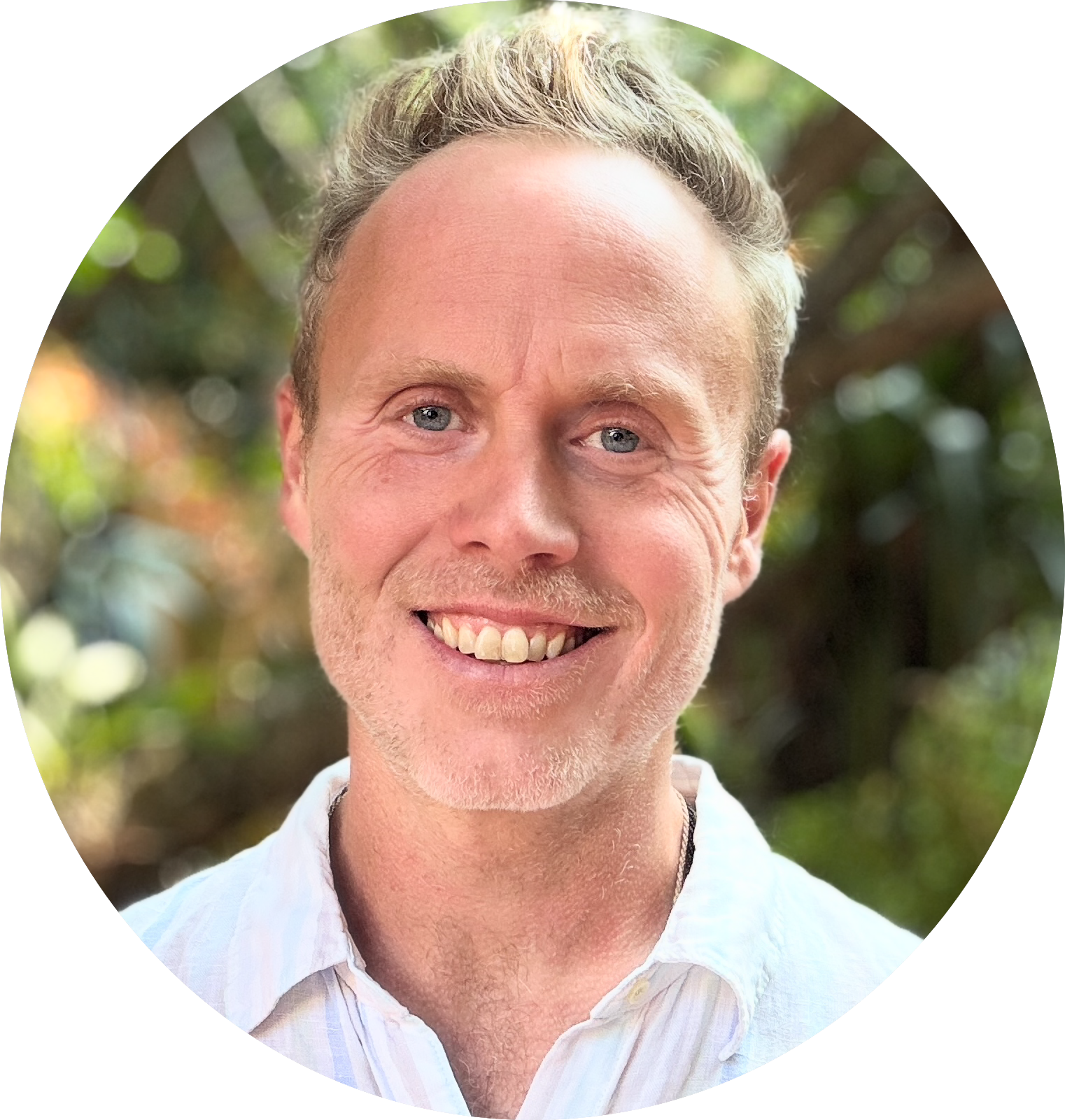
John Hopkins (Hoppy) is the founder of Aliveness, the practice of living fully in a finite life. A former CEO, acclaimed creative and Soul Midwife, he helps people stop drifting, make braver decisions and build lives with fewer regrets.