


ALIVENESS
A philosophy and practice for living fully in the awareness that life is finite.
This summer I took myself to a small island in the Swedish archipelago, alone, and didn’t eat for three days, taking on minimal fluids.
It was my version of what people call a ‘vision quest’. Humans have done vision quests for thousands of years, across almost every indigenous culture.
You take yourself into the wilderness, without food and water, to sit and meditate and enter a state of deep insight. Aboriginal walkabouts, Druids in the forest, Yogis in caves. The term vision quest actually originates from Native American traditions.
I did my first vision quest three years ago in a forest in Somerset, with no tent, just myself, the trees and the wildlife. It was one of the most powerful experiences of my life and one that made me appreciate being alive, and all the daily comforts I often take for granted. This summer I felt the pull again.
I advise anyone interested in a vision quest to research it carefully and understand the risks.
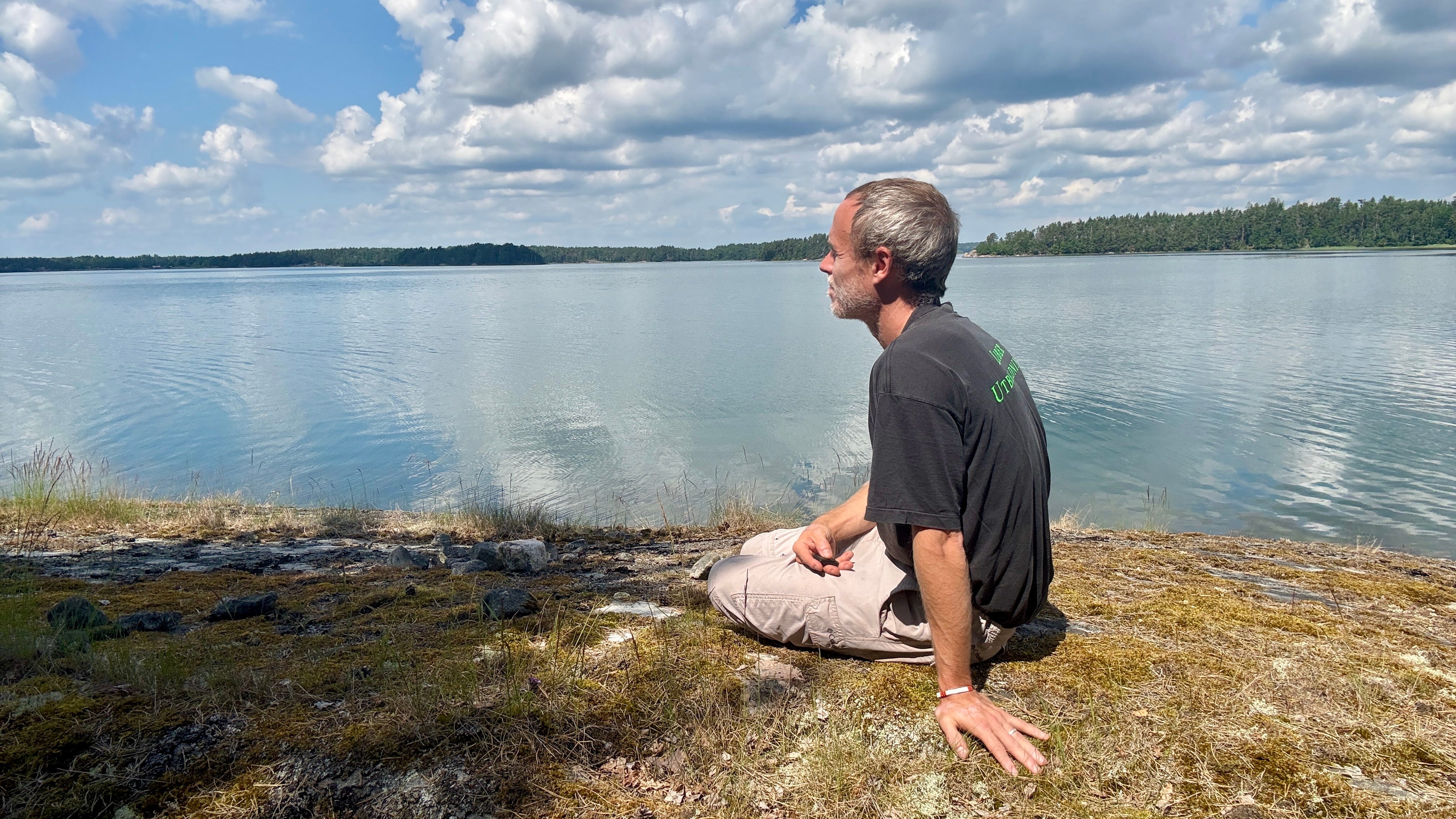
I was scared, but my fear was all in the build-up. The days before, second-guessing, imagining what might go wrong, getting anxious as I ran the worst case scenarios. What if I couldn’t handle the hunger? What if something happened out there with no one around? What if, what if … ?
Any remaining anxiety dissolved away once I was dropped off on the island, found my spot, sat down under some lovely oak trees, and set my intentions for the days ahead.
Above all, I wanted to meditate on a concept that’s been growing in me for some time: how fear can point us where we need to go in life.
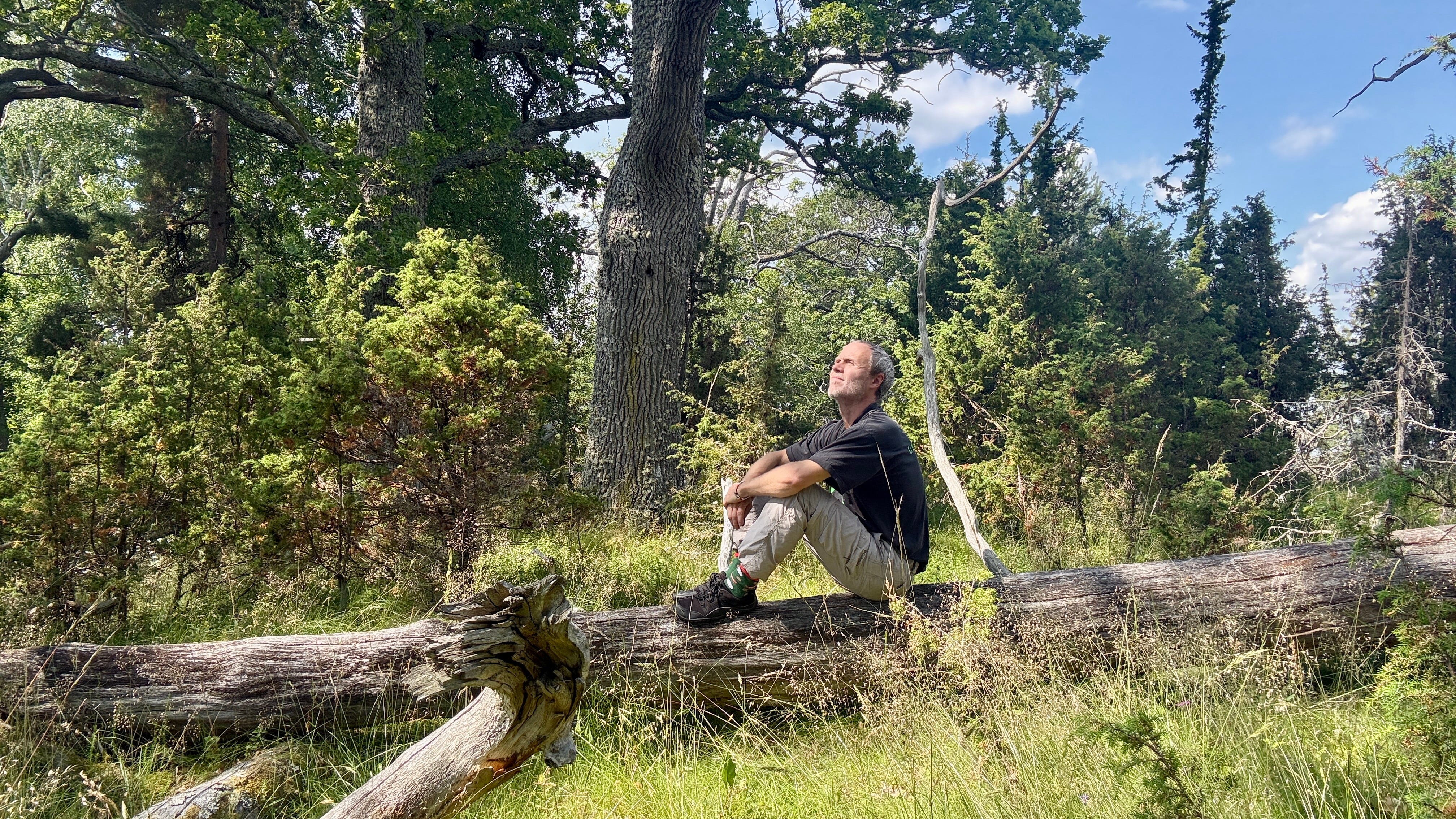
Sitting in nature like this is beautiful. Three days of extreme quiet, the kind you almost never get in our world of stimulation. The nights weren’t frightening so much as thrilling, lying there alone listening to the sounds of the island.
The second day was physically challenging as the the body begins to starve. Nausea and headaches creep in. There’s something else that happens when you go without food and water for days. Your body starts to register it as a threat to survival, because it is.
An older awareness begins to reveal itself. This is because, on one level, your body starts to die. As someone who is actively exploring mortality and aliveness, that’s why I am doing it - to exist for a while in the liminal space between life and death. To be deliberately out of my comfort zone and to gain the powerful insights, the ‘visions’ that are available in these liminal states. This is where life becomes super vivid and flow states of thought can occur.
Out there on the island, with nothing to distract me, one exhilarating idea arrived with a clarity that gave me goosebumps.
Before I get to that, let’s consider some everyday fear scenarios for a second. There’s the awkward conversation you might mentally rehearse for days, that takes three minutes. The email to your boss you stare at for hours before sending. The first time you step onto a stage, or press publish, or say the true thing out loud.
Fear can be overwhelming beforehand and almost always an anti-climax. You do the ‘scary’ thing, and then you realise it was not as scary as your mind led you to believe. And you often feel much better once you’ve done it.
We treat fear as a wall… a thing to break through, or a set of limiting beliefs to dismantle. But sitting in that forest, I started to think that fear might be something else entirely.
I am starting to believe that fear is an evolutionary force. Like an inner gravity that pulls mortal beings away from death and towards where they need to grow.
Here’s what I mean. Fear evolved to keep us alive. For most of human history the thing you feared could genuinely kill you: sabre-tooth tigers used to hunt our ancestors, for example.
So fear was survival, plain and simple. But today most of us have lives where almost nothing threatens us physically. However, the old wiring is still working in us, pulling strings. It just has very little real danger left to point at. It therefore floods the body with the same alarm our ancestors felt facing a predator in the dark, over things that can't actually hurt us.
Now let’s frame this through an evolutionary lens.
Think of the flying squirrel. Somewhere in the past a normal squirrel leapt from a tree to escape the bite of a snake. Over time the species grew the skin between their forearms and back legs that became wings. To make escape from death more effective this creature became a flying squirrel. The threat to the squirrel’s survival is what forced the adaptation.
You can track any adaptation of mortal creatures the same way, from plants to animals.
Humans are no different. We grow as individuals and societies when something frightening pushes us to do something brave that we’ve never done before. Without the fear or threat, we stay put. We never step into the unknown, and we never find out what we’re actually capable of. I believe that is how life works.
So our fear points at other things now. The new venture. The honest conversation. The change of career. The public speech. And we feel that ancient, full-body alarm and read it the way our ancestors did: Danger! Turn back!
But it isn’t danger. It’s just your edge of the known. The place where you stop repeating your life and start expanding it.
Which makes me wonder whether fear isn’t a wall at all, but an evolutionary force. At one end this force grows from our fear of death, the survival instinct, keeping us alive. At the other, the force pulls us towards where we’re meant to grow.
Ignore it, refuse to let this force lead you, stay safe inside the comfort zone, and life slowly contracts and withers. Resentment and regret build over time when we do not follow the pull of this force. And eventually we develop a fear of expansion itself.
Follow it, and it works like an inner gravity, pulling you toward the very things that would stretch and blossom you into someone larger and more beautiful.
Death creates fear > Fear creates adaptation > Adaptation creates evolution.
‘Fear’, as a word, to me, has negative connotations. I am starting to wonder - are we even calling this force by the correct name? This ‘force’ feels bigger and more significant than the definition we have historically given it.
I am now writing a hypothesis about this idea. If you would like to help me or know how I can evolve this idea into something that goes into the world, please get in touch.
Every time my life has expanded for the better, it started with fear. The best decisions I’ve ever made were always the scariest ones. My mind always making things out to be worse than they were. And every scary decision, once made, turned out to be the doorway to a bigger life.
The pattern is so consistent in my life I’ve started becoming suspicious of prolonged comfort and started trusting fear. When something frightens me now, and it’s the type of fear that pulls me toward it (rather than just experiencing a recoil), I’ve learned to treat that as a sign post.
Fear is a compass you can tune into.
When you break the barrier and do the new thing, you discover it wasn’t the cliff edge your mind imagined. And on the other side is a version of you that’s more capable than the one who was afraid. This becomes a practice. The more often you step towards your fear, the braver you get, the more you expand.
I believe that's where our potential lives, both as individuals and as a species. Fear isn't the enemy and safety isn't the friend. Fear (or whatever this force might get called in the future) might be the very thing pointing us toward who we're meant to become, and toward the answers we're all looking for.
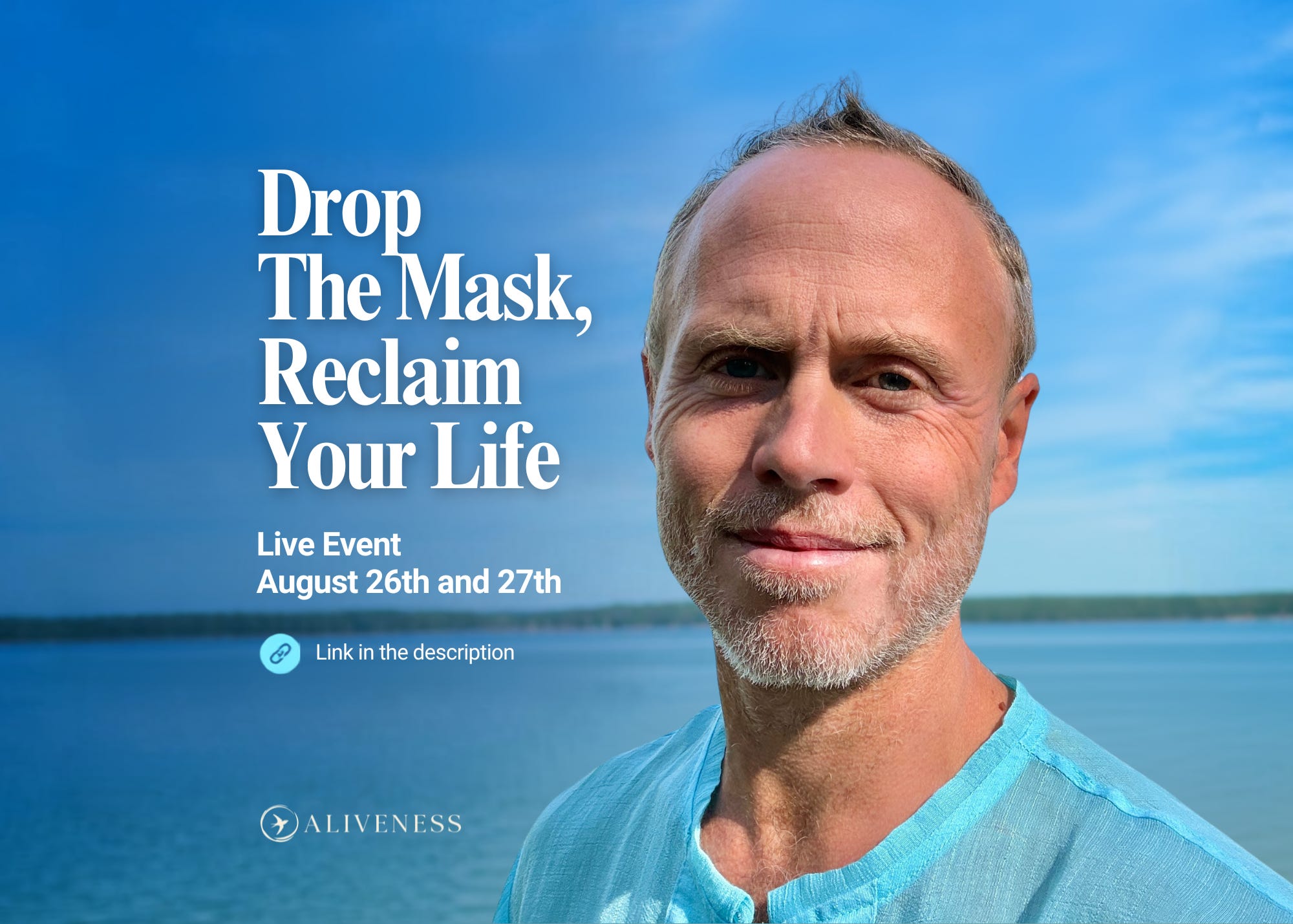
If this newsletter resonates, there’s a good chance you already know the decision your fear is pointing at.
In a couple weeks I’m running a free two-day event for exactly this - to help people standing in front of a big, frightening change they haven’t yet made. Together we’ll find the first real step out of anxiety and toward your authentic life.
August 26th and 27th. FREE.
This week’s question
What are you dreading right now that you are also feeling drawn toward?
That combination - the fear and the pull together - is worth paying attention to. It might be your inner compass speaking.
Thank you for being here. Make the most of the time you have.
Live happy,
Hoppy

Tools / Essays / Events / Instagram / Manifesto / About
If this article landed with you, please share it with one person who needs it.
I am a former CEO, filmmaker, soul midwife and druidic bard. As I entered midlife I realised I was living a life that no longer aligned with the person I had become. So I changed direction and created Aliveness. I have a dream that Aliveness becomes as impactful as Mindfulness. A daily practice that helps people live more bravely, leave fewer regrets and build a more present and generous world.


Another great piece John. Lots to contemplate. Thanks so much for sharing xx