

ALIVENESS
A philosophy and practice for living fully in the awareness that life is finite.
Free subscribers receive The Aliveness Practice PDF guide. Paid subs get access to a growing library of exercises and AI guides designed to help you stop drifting and start living consciously.
Recently actor Nicole Kidman announced she was training as a death doula.
Wow. I felt something shift when I read it. The recognition of a lost profession I can see becoming a huge industry in the next decade.
Because this work is not a trend. It is as old as human consciousness itself.
Since the first moment our ancestors became aware of their own mortality, there have been people whose role was to guide others through the crossing. At birth and at death, threshold guides, or doulas, have always existed. Perhaps the most ancient and sacred of all human callings.
And yet the role of the death doula has been almost entirely forgotten. Which is extraordinary when you think about it. Because death is the only thing in life that is guaranteed. The one certainty every single one of us shares. And we have somehow managed to build an entire civilisation around looking the other way.
The cost of ignoring mortality is bigger than most of us want to look at.
When we push death out of sight we don’t escape the fear of it. We just drive it underground. And underground it mutates.
Fear of death becomes fear of failure, fear of rejection, fear of change, fear of not being enough. Trace any of those fears back far enough and you find the same thing sitting at the root. The terror of ending. Of not mattering. Of disappearing.
And it doesn’t just affect us individually. When whole societies are run by people who have never made peace with their own mortality, you get what we have. Fear-based decision making. Short-term thinking. Status addiction. Hoarding. Xenophobia. Conflict.
Bringing death back into the conversation doesn’t mean becoming morbid. It just means becoming honest. I’ve seen what happens when people do that. Something loosens. In them and in the world around them.
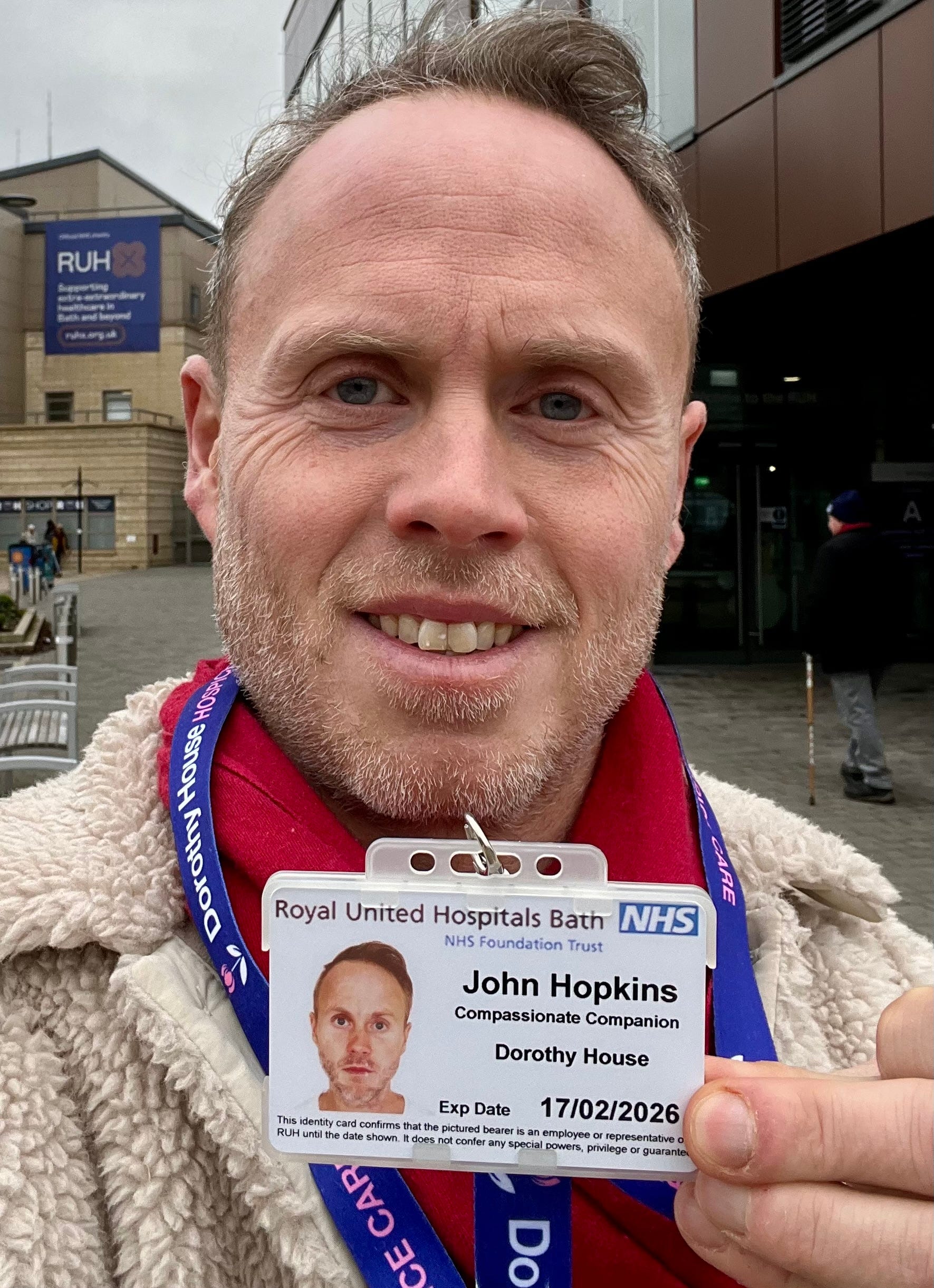
For a period of my life I volunteered through the NHS and Dorothy House as a Compassionate Companion, sitting with dying patients at the Royal United Hospital in Bath. People who had no one else beside them. No family. No friends. No hand to hold. This is the sad truth for a lot of deaths in the west.
I had trained as a Soul Midwife, a type of end-of-life guide. Soul Midwives are non-medical. We don’t try to ‘fix’. We provide loving presence.
I walked into that ward knowing exactly what I was doing. I had trained for that moment. But it was scary, none-the-less, and a threshold, of sorts, for me.
The one thing I learnt in my training with the amazing Felicity Warner (head of the Soul Midwives) was this… if you don’t know what to do in a situation, just ask one question: “What would love do?”
I thought I was going to sit with dying people to help them. But I had no idea how much they were going to help me. Help me discover things about myself I hadn’t been able to see before. And help me understand the work I am doing today, using mortality as a key to unlock a life fully lived.
The first person I ever sat with was an elderly woman I will call Jane.
She was unconscious. Fading. I sat beside her and took her hand.
What happened next I wasn’t expecting. Holding her hand, I felt her as I feel my daughter when she was very small. That same quality of vulnerability. That same complete defencelessness. As if all the layers that adult life puts on us had fallen away and what was left was just a person, at the beginning and the end of everything, needing only one thing.
Unconditional love.
Jane could feel my presence. I know that. I felt it in the hand I was holding. Not in any way I can point to on a diagram. But she was not gone yet. And I held her hand like it mattered.
Because it did.
Most of what I did in those rooms was stillness.
I sat. I breathed. I listened. Sometimes I sang. I read their favourite poetry. I played their favourite music.
Sometimes I would go inward, building what felt like an invisible bridge between us. Sometimes I matched my breathing with theirs. Breath meeting breath across the space between us.
To find the right quality of presence I would call to mind my daughter as a toddler. Small, trusting, clinging to me in the way small children do when they think you are the whole world and the only safe place in it.
When I let her face appear in my mind, something in me shifted into a different kind of attention. Not clinical. Not trying to manage anything. Just love, without any agenda at all.
Often I cried. I believe that mourning is part of what I was there to do. Not grief for myself, but something closer to celebration. I would think about all the things this person had brought into the world.
The people they had loved. The moments they had lived. The particular way they had moved through their one life. Crying felt like the most honest response to all of that. It still does.
What those rooms taught me cannot be learned any other way.
At the end of life, almost nothing that seemed important turns out to be. Achievements fall away. Possessions dissolve. What remains, the only thing that actually remains, is love. The relationships. The presence you offered or withheld. The moments you were truly there and the moments your mind was somewhere else entirely.
One of the biggest inspirations of my life, philosopher Ram Dass, once said: “Dying is like taking off a tight shoe.”
I’ve thought about that line more times than I can count.
The dying don’t regret the risks they took. They regret the love they held back.
I want to be honest about something.
Those rooms showed me a blockage in myself that I still find hard to admit.
I don’t always express love easily. To friends. To family. To the people who matter most to me. I feel it. But somewhere between feeling it and saying it, something gets stuck. Some old habit of holding back. A gap between what I carry inside and what I let out.
I recognised it for the first time in those hospital rooms. Watching people at the very end of their lives reaching for a connection they hadn’t allowed themselves to have.
I recognised myself in them.
I am working on this. Not always successfully.
The Aliveness Practice is part of how.
When you sit with the truth that your time is finite, the things you’ve been holding back start to feel less safe to keep holding. The love you haven’t expressed. The conversations you keep finding reasons to postpone. The people who deserve more of you than they’re getting.
It doesn’t fix this overnight. Nothing does. But it makes the holding back harder to justify.
I think of my work now as threshold guiding.
Standing with someone at the most significant crossing of their life. Not pushing them forward or pulling them back. Just present enough that they don’t have to cross alone.
The threshold isn’t always mortality. It might be midlife. A career that no longer fits who you’ve become. A version of success that turned out to be someone else’s definition. A life that looks fine from the outside and feels hollow from within.
Different thresholds. The same crossing.
It is the work I feel most called to do. Writing this newsletter is part of it.
One question this week.
Is there someone in your life who doesn’t know how much they mean to you?
What’s stopping you from telling them today?
Not tomorrow. Today.
Don’t wait until it’s too late to say it.
Thank you for being here.
Live happy,
Hoppy
If this landed with you, please share it with one person who needs it.
Tools & Updates
Aliveness Practice workshops and guided meditations for subscribers are coming soon.
Reverstory: my bespoke AI guide that shows you the life you’re heading towards, so you can avoid future regret and start living with clarity and confidence. Available to paying subscribers.
Live Purpose: my other AI guide that helps you choose your direction and build a life that feels right, meaningful, and aligned with who you are. Available to paying subscribers.
Go deeper: The Aliveness Practice / Improve Your Sleep / The World Beneath The Surface
Wow John…what a truly profound and beautiful service to gift to another human being ♥️🙏🏽
A precious function and profound kindness we can offer to our kind. I hope you are right and many more people discover that dying can a beautiful experience.